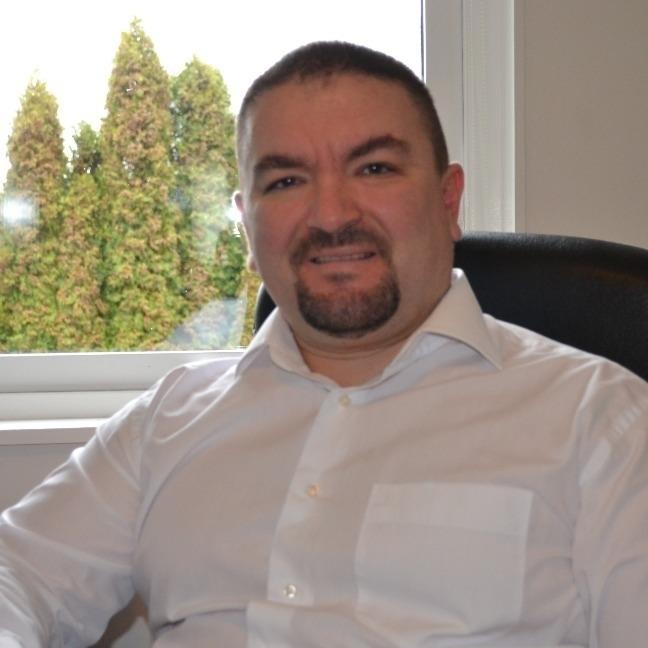
Dr. Alper Idrisoglu is a postdoctoral researcher in Applied Health Technology at Blekinge Institute of Technology (BTH), specializing in AI-driven digital biomarkers, multimodal sensor data, and machine-learning methods for clinical decision support. He earned his MSc in Computer Engineering and Digital Media Technology in 2021, followed by a Licentiate degree in 2024 and a PhD in Applied Health Technology in 2025. His research bridges advanced analytics with hands-on system development, including voice-based diagnostics, wearable sensor platforms, and reproducible data-collection pipelines for ageing and chronic-disease research.
Alongside his research, Dr. Idrisoglu has extensive teaching experience in IoT, sensor systems, measurement technology, control engineering, and eHealth. He has supervised engineering master’s theses and nursing bachelor’s theses, reflecting his interdisciplinary role between technology and healthcare. He is also an active peer reviewer for international journals and contributes to the development of applied health-technology infrastructures at BTH.
Education
2025 – PhD in Applied Health Technology
2024 – Licentiate in Applied Health Technology
2019 – Master of Science in Computer Engineering and Digital Media Technology
Working experience
From 2025 to present, I have been a postdoctoral researcher in applied health technology at Blekinge Institute of Technology’s Department of Health.
From 2021 to 2025, PhD student at Blekinge Institute of Technology. Until 2023, a teacher at Blekinge Institute of Technology, courses in measurement technology, electronics with a focus on IoT, control technology, and sensor systems. Since 2024, teaching in eHealth and supervising bachelor’s theses.
From 2019 to 2021, I worked as a bus driver at Bergkvarabuss AB and a teacher at Blekinge Institute of Technology in courses on measurement technology, electronics with a focus on IoT, control technology, and sensor systems.
From 2014 to 2019, in addition to my regular studies, I worked as a bus driver at Bergkvarabuss AB in Karlshamn.
From 2011 to 2013, I owned my own plumbing company.
From 2003 to 2007, I worked as a technician at a pharmaceutical company (Abdi Ibrahim) in Istanbul, Türkiye.
From 2001 to 2003, I served in the military as a sergeant. I was responsible for over 346 vehicles and the staff.
Technical Competencies
My competencies include system design, applied machine learning, and software development, supported by an educational background that enables me to conceptualize and integrate technical solutions into health-related research workflows. Even though I mostly work in Python, I also have programming competence in C/C++, Java, JavaScript, PHP, and MATLAB. My competencies cover reproducible analysis workflows, metadata structures, database handling, and the preparation of multimodal datasets for use in health data analytics. I also have experience in sensor and IoT development for health-related data collection, including microcontroller programming, inertial sensing, firmware development, and wireless sensor communication, complemented by practical skills in embedded systems and PCB design.
Pedagogical Qualifications
My pedagogical qualification is grounded in formal university training, interdisciplinary teaching experience, and a reflective approach to learning that integrates digital health, engineering and applied research. I have completed Higher Education Pedagogy I & II (15 ECTS) at Blekinge Institute of Technology (BTH), which provided a strong foundation in constructive alignment, course and assessment design, intended learning outcomes (ILOs), and evidence-informed teaching practices.
Teaching Philosophy
My teaching is based on creating clear alignment between learning outcomes, teaching activities, and assessment. I aim to support students’ understanding by connecting abstract concepts to practical, real-world tasks and by using active learning strategies that promote autonomy, critical thinking, and hands-on experimentation. I view the teacher’s role as guiding students toward analytical competence, methodological rigour, and reflective practice.
Teaching Experience
I have teaching experience across engineering and nursing programmes, focusing on topics such as:
IoT and embedded systems
Sensor technology and data acquisition
Applied machine learning for health contexts
Measurement systems and signal interpretation
eHealth concepts
This includes lectures, seminars, workshops, laboratory supervision and project coaching. Teaching across disciplines has strengthened my ability to communicate technical topics clearly to students with different academic backgrounds.
Course and Module Development
I have contributed to the development of course components in:
IoT and sensor systems (hands-on data collection, embedded programming, system design)
Measurement and signal understanding (practical data interpretation and methodological considerations)
eHealth (introductions to digital workflows, data ethics, and clinical contexts)
My work includes developing assignments, refining laboratory instructions, ensuring constructive alignment, and embedding research-based content into teaching materials.
Laboratory, Workshop, and Practical Instruction
Hands-on learning is central to my pedagogical approach. I design and deliver practical sessions where students:
Build and test microcontroller- and sensor-based systems
Collect and analyse data from real hardware
Investigate noise, calibration, and signal quality
Relate data patterns to health-related use cases
This practical orientation helps students understand not only how to perform technical tasks but why methodological choices matter.
Supervision and Examination Experience
I have supervised and co-supervised bachelor’s theses in:
My supervision emphasises structure, clarity, and methodological soundness. I support students through the full process, from planning and data collection to analysis and writing. I maintain an open-door policy outside scheduled teaching hours, allowing students to seek support, ask questions, and discuss their work without needing an appointment.
Bachelor’s Thesis Examination – Nursing Program
Scharin, E., & Abramsson, S. N. (2025). Kommunikationens betydelse vid vård av personer med demenssjukdom: En allmän litteraturöversikt ur sjuksköterskans perspektiv. BTH, 15 ECTS.
Fritz, O., & Nilsson, R. (2025). När primärvården loggar in: Sjuksköterskors erfarenheter av digitala vårdmöten. BTH, 15 ECTS.
Emma, H., & Josefine, Å. (2025). Hjälp mig att dö!: En allmän litteraturöversikt. BTH, 15 ECTS.
Bachelor’s Thesis Supervision – Nursing Program
Alfredsson, J., & Hernández, D. A. (2025). Etik i algoritmernas era: Sjuksköterskans roll i en AI-driven vård. BTH, 15 ECTS.
Johansson, W., & Munhel, F. (2025). Sjuksköterskan, vårdrelaterade infektioner och artificiell intelligens (AI). BTH, 15 ECTS.
Anderson, O., & Lillerud, L. (2025). Att främja hälsa hos äldre: Samband mellan fysisk aktivitet och hjärt-kärlsjukdomar. BTH, 15 ECTS.
Mårtensson, R., & Ström, A. (2025). Sjuksköterskors erfarenheter av personcentrerad vård vid KOL inom slutenvård: En integrerande sammanställning av kvalitativ forskning. BTH, 15 ECTS.
Rangannagari, R. V. S., & Deverakonda, S. P. (2022). Automated Solar Panel Shield: An IoT Approach. BTH. 15 ECTS.
Potnuri, P. B. S., & Poliki, S. C. (2022). Artificial Electronic Nurse: An IoT-Based Health Monitoring System. BTH. 15 ECTS.
Tenali, O. S., & Narayana, S. R. J. C (2022). Solar Panel Protection from Birds and Land Animals. BTH. 15 ECTS.
Assessment and Feedback Practices
I use a combination of formative and summative assessment methods, including oral and written feedback, rubric-based evaluation aligned with intended learning outcomes, and iterative project check-ins. I also maintain an open-door policy outside scheduled teaching hours, which allows students to approach me with questions, ideas, or challenges and receive timely support.
Publications
Peer-Reviewed Journal Articles
Idrisoglu, A., Behrens, A. Use of machine learning and voice for multiclass classification of Parkinson’s disease, chronic obstructive pulmonary disease, and healthy controls. Sci Rep16, 15485 (2026). https://doi.org/10.1038/s41598-026-53409-3
Idrisoglu, A., et al. (2025). Feature analysis of the vowel [a:] in individuals with chronic obstructive pulmonary disease and healthy controls. Journal of Voice.
Idrisoglu, A., Moraes, A. L. D., Cheddad, A., et al. (2025). Vowel segmentation impact on machine learning classification for COPD. Scientific Reports, 15(1), 9930.
Idrisoglu, A., Dallora, A. L., Cheddad, A., et al. (2024). COPDVD: Automated classification of COPD on a new voice dataset. Artificial Intelligence in Medicine, 156, 102953.
Idrisoglu, A., Dallora, A. L., Anderberg, P., & Berglund, J. S. (2023). Applied machine learning techniques to diagnose voice-affecting conditions and disorders: A systematic literature review. JMIR, 25, e46105.
Javeed, A., Dallora, A. L., Berglund, J. S., Idrisoglu, A., et al. (2023). Early prediction of dementia using FEB and optimized SVM. Biomedicines, 11(6), 1447.
Idrisoglu A, Flyborg J, Nauman Ghazi S, Mikaelsson Midlöv E, Dellkvist H, Axén A, Dallora AL. Prediction of Mini-Mental State Examination Scores for Cognitive Impairment and Machine Learning Analysis of Oral Health and Demographic Data Among Individuals Older Than 60 Years: Cross-Sectional Study. JMIR Medical Informatics. 2025 August 25;13:e75069.
Conference Contributions:
Idrisoglu, A., Javadi, S. (2024). Perceptions of international students in Sweden. IEEE Education Conf.
Flyborg, J., Idrisoglu, A., Anderberg, P., et al. (2024). Oral Health Parameter-Based MMSE Using ML. ICBCB 2024, IEEE.
Thesis:
Doctoral thesis: Idrisoglu, A. (2025). Voice as a Digital Biomarker: Machine Learning Applications for Chronic Obstructive Pulmonary Disease Assessment
Licentiate thesis: Idrisoglu, A. (2024). Voice for Decision Support in Healthcare Applied to Chronic Obstructive Pulmonary Disease Classification: A Machine Learning
Master’s thesis: Idrisoglu, A. (2019) Wireless Sensor System for Monitoring Sportsmen Exposed to Hazardous Concussions.